How Often Should I Give Gifts to My Customers?
One of the most common questions businesses ask about customer appreciation is:
How often should I give gifts to my customers?
Should you give gifts every month?
Once a year?
Only during the holidays?
Or whenever a customer reaches an important milestone?
There is no universal number that works for every business.
The better approach is to stop thinking about customer gifting as a competition to see who can give the most gifts.
Instead, think about when a gift can strengthen the relationship and create meaningful brand recall.
A thoughtful gift at the right moment can be far more valuable than several gifts that feel routine, predictable, or promotional.
Don't Confuse More Gifts With Better Customer Appreciation
Giving customers gifts too frequently can actually reduce their impact.
If customers receive something from you every few weeks, the gifts may eventually feel ordinary.
Worse, they may begin to feel like promotional merchandise rather than genuine appreciation.
Customer gifting works best when the gift has a reason behind it.
You might give a gift to:
Celebrate a customer's anniversary.
Recognize a major milestone.
Thank a long-standing customer.
Celebrate a significant purchase or achievement.
Welcome an important new client.
Mark a special holiday or occasion.
Show appreciation after a successful project.
Recognize a referral or valuable contribution.
The objective isn't to create a constant stream of gifts.
It's to create meaningful moments throughout the customer relationship.

So, How Often Should You Give Customer Gifts?
For many businesses, one to four meaningful gifting occasions per year can be a reasonable starting point.
But this is not a rigid rule.
A business with thousands of customers may have a different strategy from a company managing a small number of high-value accounts.
For example, you might use:
One major annual appreciation gift for your broader customer base.
Then provide additional gifts selectively for important milestones or exceptional customer relationships.
For high-value clients, you may have more opportunities for thoughtful appreciation throughout the year.
The important thing is that every gift should have a purpose.
Ask:
"Why am I giving this gift now?"
If you don't have a meaningful answer, you may not need to give one.
The Gift Doesn't Have to Be Frequent to Keep Your Brand Visible
Here's where customer gifting becomes particularly interesting.
You don't necessarily need to give a customer a new gift every month to maintain visibility.
Instead, give them something valuable enough to remain useful and visible.
A premium desk calendar, for example, can remain on a customer's desk throughout the year.
An elegant wall calendar can remain displayed for months.
Inspirational wall art can remain part of a customer's workspace long after the gifting occasion.
A quality branded T-shirt can be worn repeatedly.
A useful journal or notebook can become part of someone's daily routine.
These products can provide daily brand visibility without advertising because the customer is interacting with something useful rather than simply seeing a paid advertisement.
This is one reason the best corporate gifts for customer appreciation aren't necessarily the most expensive.
They are the gifts that continue providing value.
Think in Terms of Gift Lifespan
Instead of asking only:
"How often should I give a gift?"
Ask another question:
"How long can this gift continue creating value?"
This is a powerful shift.
Suppose you give a customer a gift that gets used once.
Its physical lifespan may be short, even if the customer appreciates the gesture.
But suppose you give them a high-quality calendar that remains visible for twelve months.
Or wall art that stays on their office wall for years.
Or a practical product they use repeatedly.
The gifting frequency may be lower, but the gift itself has a much longer working life.
That's why customer appreciation gifts for long-term brand recall should be evaluated by more than their immediate emotional impact.
Think about:
Usefulness + Meaning + Visibility + Longevity
The stronger these elements are, the longer the gift can potentially contribute to the relationship.
Create a Customer Appreciation Calendar
Rather than randomly giving gifts throughout the year, consider creating a simple customer appreciation calendar.
For example:
January–March
Focus on relationship-building and customer milestones.
April–June
Recognize major achievements, anniversaries, referrals, or customer success.
July–September
Consider a mid-year appreciation initiative for selected customers.
October–December
Use the holiday or year-end period for broader customer appreciation.
The exact schedule will depend on your industry and customers.
The point is to make gifting intentional rather than reactive.
Not Every Customer Needs the Same Gift
Another important consideration is customer segmentation.
You don't necessarily need to give identical gifts to everyone.
You could have different appreciation strategies for:
New customers
Long-term customers
High-value customers
Referral partners
VIP clients
Customers celebrating milestones
This allows you to control your gifting budget while making appreciation more relevant.
A small gesture can be appropriate for one group, while a premium gift or experience may make more sense for another.
What Makes a Gift Worth Giving?
Before giving any customer gift, consider five questions:
1. Is it useful?
Will the recipient actually use it?
2. Is it meaningful?
Does it communicate genuine appreciation?
3. Is it appropriate?
Does it fit the customer and the relationship?
4. Is it durable?
Will it remain useful or visible?
5. Is it worth keeping?
Would the customer still want it if your logo weren't on it?
That final question is particularly important.
If the answer is no, you may be creating promotional merchandise rather than customer appreciation.
Turn Useful Gifts Into Silent Brand Ambassadors
A well-designed branded gift can do more than thank a customer.
It can continue representing your business after you have handed it over.
A premium calendar on a desk.
A beautiful piece of wall art in an office.
A quality T-shirt worn outside the workplace.
A useful notebook carried into meetings.
These products can become Silent Brand Ambassadors.
They don't need to aggressively advertise your company.
Their value comes from being useful enough that people willingly keep them.
That distinction matters.
The customer isn't necessarily thinking:
"I'm looking at an advertisement from this company."
They're thinking:
"This is useful."
And every time they use or see it, your brand may be naturally associated with that positive experience.
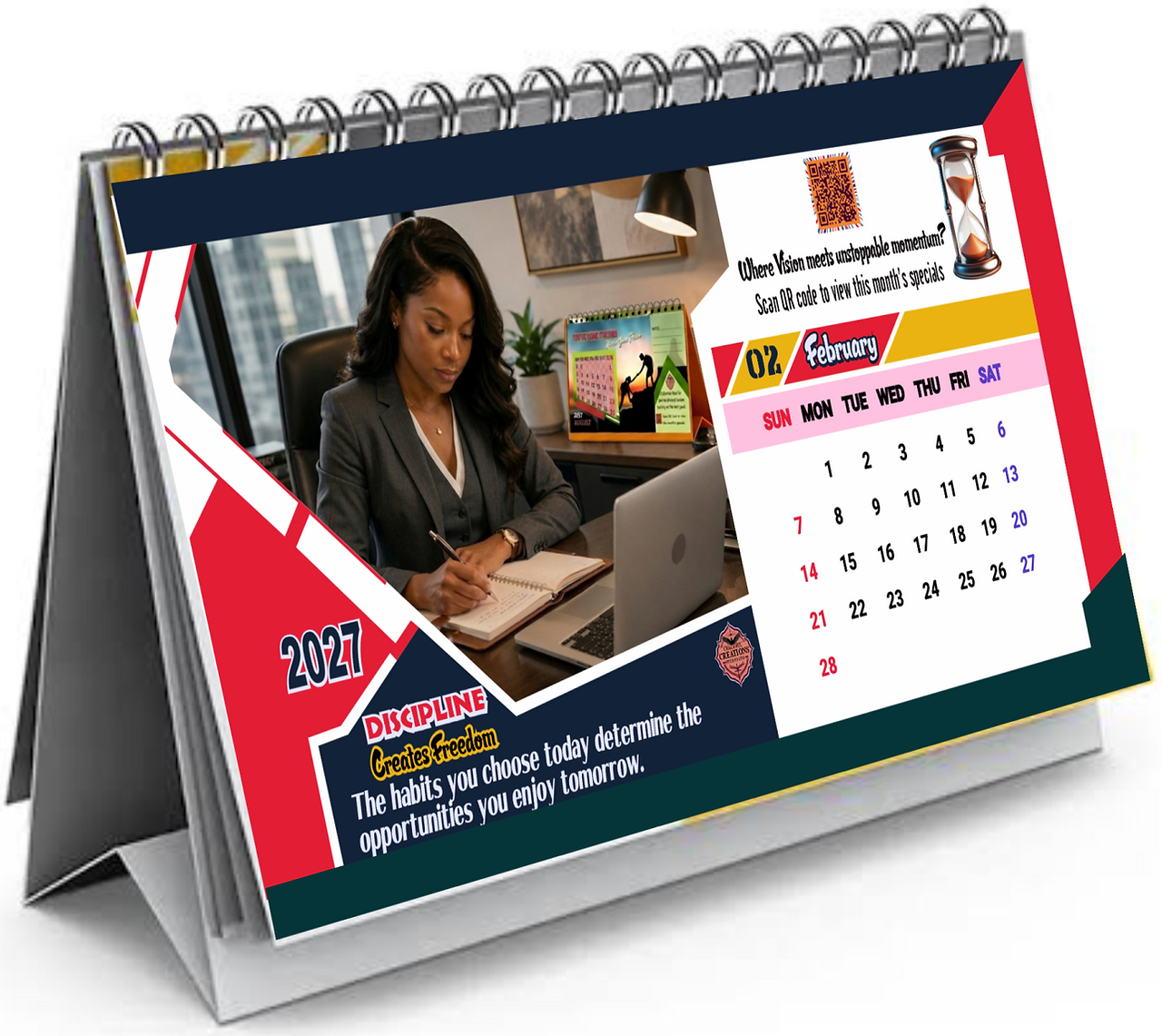
2027 Inspirational Desk Calendar 
Creative and Innovative corporate hardcover notebook 
A man wearing an embroidered motivational baseball cap 
A woman wearing a sky-blue T-shirt inscribed with "Thank you for trusting us"
The 365-Day Customer Retention Perspective
Customer appreciation shouldn't be viewed as a once-a-year marketing activity.
It can be part of a broader 365-Day Customer Retention strategy.
The idea is simple:
Don't wait until customers are about to leave before showing them that you value the relationship.
Look for opportunities throughout the customer lifecycle.
Welcome them.
Thank them.
Celebrate milestones.
Recognize loyalty.
Acknowledge referrals.
Celebrate achievements.
And occasionally surprise them with something genuinely thoughtful.
But remember:
365-Day Customer Retention does not mean 365 days of giving gifts.
It means creating a customer experience in which appreciation, value, communication, and relationship-building continue throughout the year.
A strategically chosen physical gift can support that strategy by remaining useful and visible long after it is delivered.
What If My Customers Already Receive Gifts From Me?
If you're already giving gifts regularly, review your gifting history.
Ask:
Which gifts were actually used?
Which gifts were kept?
Which gifts generated positive feedback?
Which gifts disappeared quickly?
Which gifts created meaningful conversations?
Which gifts remained visible months later?
You may discover that your most successful gifts weren't necessarily the most expensive.
They may have simply been more useful, more relevant, more meaningful, or more durable.
Use those insights to improve your next gifting cycle.
That's why at Graceful Creations Studio, we've fashioned out a way for you to get customer feedback on your gifting.
With our gifting feedback mechanism, you are able to accurately measure your gifting performance without guessing.
The Right Frequency Is About Relevance, Not Volume
So, how often should you give gifts to your customers?
Often enough to demonstrate genuine appreciation, but not so often that the gesture loses its meaning.
For many businesses, one major annual customer appreciation gift combined with occasional milestone-based gestures can be an effective starting point.
But the ideal frequency depends on your customers, business model, relationship value, budget, and the type of gifts you provide.
Most importantly, don't measure your gifting strategy by the number of gifts you distribute.
Measure it by the value those gifts create.
And Graceful Creations Studio has a measurement mechanism for corporate gifting.
A gift that is appreciated for five minutes is one thing.
A gift that remains useful for twelve months is something else entirely.
And a gift that continues reminding customers of a positive relationship with your business may become much more valuable than its original purchase price suggests.
Don't aim to give your customers more gifts. Aim to give them better reasons to remember you.


Comments