Are Branded Gifts Better Than Generic Gifts for Customers?
Updated: Sep 7
When businesses give customers gifts, one question often comes up:
Should the gift carry the company's branding, or is a generic gift better?
There isn't a simple yes-or-no answer.
A generic gift can feel elegant, personal, and less promotional. A branded gift, on the other hand, can help keep your business connected to the recipient long after the gift is received.
The real issue isn't whether a gift has a logo.
The better question is:
Does the gift provide enough value for the customer to keep using it—and does your branding add meaning rather than distraction?
When those two things come together, branded corporate gifts can become powerful relationship-building tools.
What Is a Generic Corporate Gift?
A generic corporate gift is an item given to a customer without prominent company branding.
It might be:
A premium gift basket
A quality notebook
A bottle or tumbler
A food hamper
A decorative item
A useful office accessory
Generic gifts can certainly be appreciated.
But once the gifting occasion is forgotten, the recipient may also forget who gave the gift.
That's one of the limitations businesses should consider.
What Is a Branded Corporate Gift?
A branded corporate gift includes some form of company identification, such as:
A logo
Company name
Brand colors
Tagline
Website or QR code
Brand message
But effective branding doesn't mean covering the entire product with a giant logo.
In many cases, subtle branding combined with a meaningful message can create a much better experience.
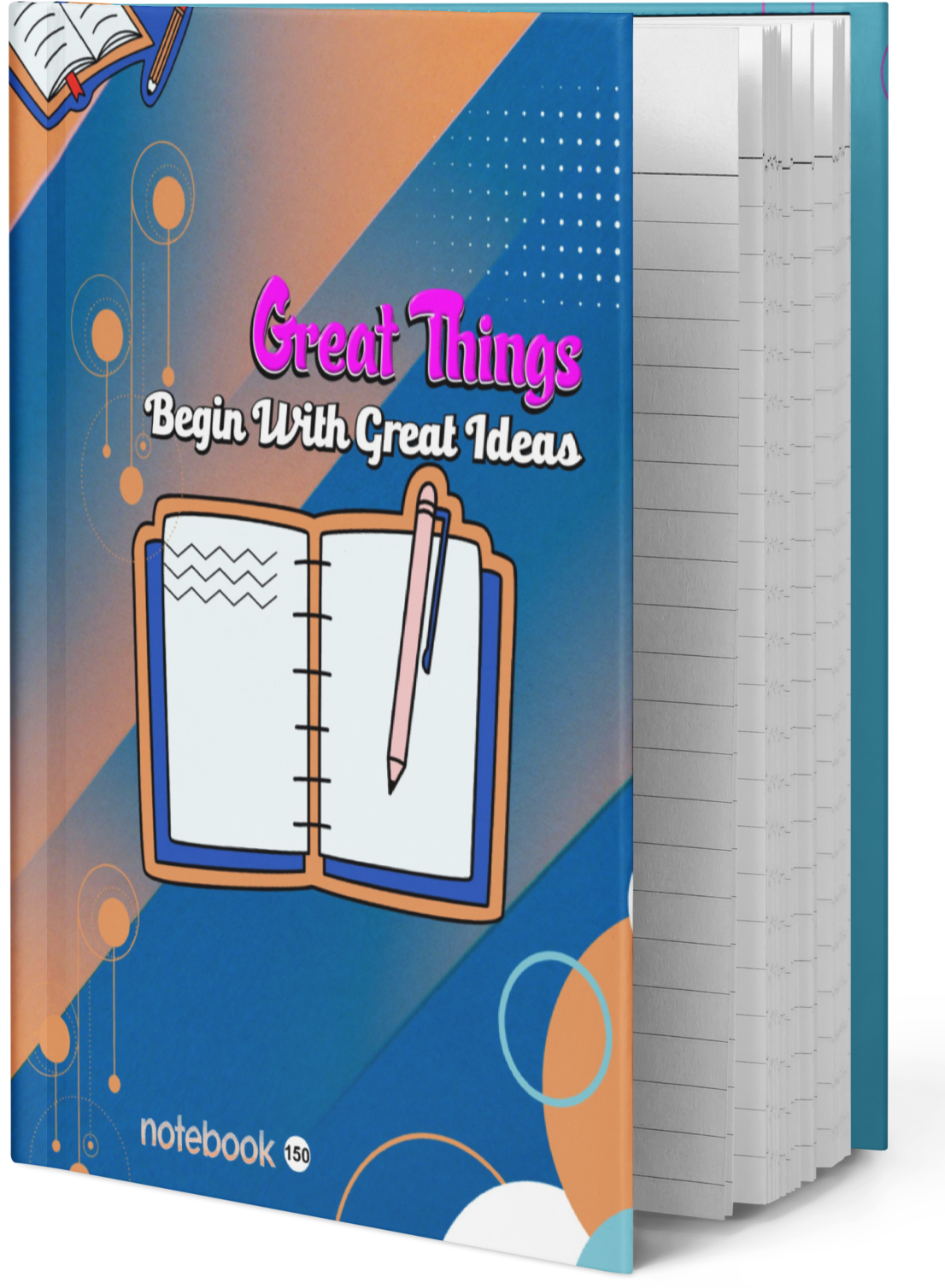
For example, a premium notebook might carry a small company logo on the back while the front says:
"Great Things Begin With Great Ideas."
The customer receives a useful product with a message they may genuinely appreciate.
Your brand remains connected to the experience.
The Real Test: Will Customers Keep It?
This is where the conversation becomes more interesting.
A corporate gift isn't valuable simply because it carries your logo.
It becomes valuable when the recipient has a reason to keep it.
Ask:
Would my customer still want this if my logo wasn't on it?
If the answer is yes, you may have found a strong gift.
This is why corporate gifts that customers keep and use deserve more attention than products chosen purely because they are easy to brand.
A useful notebook can remain on a desk for months.
A quality mug can become part of a customer's daily routine.
A desk calendar can remain visible throughout the year.
Inspirational wall art can stay in an office for years.
The product provides the usefulness.
The message provides the meaning.
The branding provides the connection.
Branded Doesn't Have to Mean Promotional
There's a major difference between branding a gift and turning a gift into an advertisement.
Imagine receiving a mug covered with:
COMPANY NAME
PHONE NUMBER
WEBSITE
EMAIL
SOCIAL MEDIA HANDLES
It may technically be branded, but it can feel like promotional merchandise.
Now imagine a beautifully designed mug carrying:
"Excellence Is a Daily Choice."
with a discreet company logo.
The second version feels more like a gift.
That's the philosophy behind inspirational branded gifts for businesses.
The recipient should receive something meaningful first.
The branding should support the experience—not dominate it.
Why Branding Can Matter for Customer Appreciation
Customer appreciation isn't only about saying thank you.
It's also about strengthening the relationship.
A thoughtful branded gift can remind customers:
"We value your business."
"We appreciate your partnership."
"We're glad you're with us."
This makes branded products particularly useful as customer appreciation gifts for long-term brand recall.
The gift can continue reminding the recipient of the relationship after the original conversation has ended.
That's difficult for a generic gift to accomplish consistently.
Generic Gifts Have Their Place
This doesn't mean generic gifts are bad.
There are situations where a generic gift may actually be preferable.
For example, if you're giving a highly personal gift to an individual customer, heavy branding might undermine the personal nature of the gesture.
Similarly, certain premium gifts may look better without visible corporate branding.
The key is to consider:
What is the purpose of the gift?
If the purpose is purely appreciation, subtle or no branding may be appropriate.
If the purpose includes maintaining long-term brand recall, thoughtful branding becomes more valuable.
If the gift is intended for a large customer base, scalable branded products may provide additional advantages.
What Makes a Branded Gift Memorable?
The strongest branded gifts usually combine several elements.
1. Usefulness
The recipient has a reason to use it.
2. Quality
The product feels worthy of being kept.
3. Meaning
The message communicates something valuable.
4. Appropriate Branding
The company is identifiable without overwhelming the gift.
5. Relevance
The gift fits the recipient and the occasion.
6. Longevity
The product remains useful or visible beyond the gifting moment.
When these elements come together, branding becomes much more than putting a logo on merchandise.
Consider the Message More Than the Logo
A logo tells people who gave the gift.
A meaningful message can influence what they remember about the relationship.
For example:
"Built on Trust. Strengthened by Partnership."
could be appropriate for a long-standing business relationship.
"Thank You for Growing With Us."
could acknowledge customer loyalty.
"Excellence Is a Daily Choice."
could reinforce a shared commitment to quality.
These messages can transform practical products into inspirational branded gifts for businesses.
The customer isn't simply seeing your company name.
They're encountering an idea.
And if that idea resonates with them, the gift has greater potential to remain meaningful.
The Advantage of Long-Lasting Gifts
Think about the difference between a gift that is consumed and one that remains in use.
A box of chocolates may create a wonderful experience.
But eventually, the chocolates are gone.
A premium notebook may still be sitting on the customer's desk six months later.
A wall calendar can remain visible for an entire year.
Wall art may remain in an office for several years.
Neither approach is necessarily wrong.
But if your objective includes 365 Days of Brand Visibility, longevity becomes an important consideration.
The longer a useful gift remains in the customer's environment, the more opportunities there are for your brand to remain familiar.
Don't Mistake Visibility for Loyalty
There is an important qualification here.
A branded gift doesn't automatically create customer loyalty.
Seeing a logo repeatedly doesn't guarantee that someone will buy from you again.
Retention depends on many things:
Product quality
Customer service
Trust
Pricing
Reliability
Customer experience
Relationship quality
Perceived value
A corporate gift should support those things—not attempt to replace them.
The purpose of thoughtful gifting is to strengthen an existing relationship, not manufacture one where none exists.
So, Which Is Better?
The answer depends on your objective.
Choose a Generic Gift When:
The personal experience is more important than brand visibility.
Prominent branding would diminish the gift.
You're giving a highly personal or premium item.
The relationship calls for discretion.
Choose a Branded Gift When:
You want the company to remain associated with the gift.
The product will be used regularly.
You want long-term brand visibility.
You're building a scalable customer appreciation program.
You want the gift to reinforce a brand message or value.
Consider a Hybrid Approach When:
You want both appreciation and brand recall.
Use a high-quality product.
Add a meaningful message.
Keep the logo subtle.
Make the presentation thoughtful.
This can give you the benefits of branding without making the recipient feel like they've received an advertisement.
The Best Corporate Gifts for Customer Appreciation
So what are the best corporate gifts for customer appreciation?
There isn't one universal answer.
But useful products with a long lifespan are strong candidates.
Consider:
Premium notebooks
Desk calendars
Quality mugs
Tumblers
Inspirational wall art
Useful desk accessories
Quality branded T-shirts
Thoughtfully designed gift sets
The key is not the product category alone.
It's whether the recipient genuinely values the product.
A $20 item that gets used every day may create more long-term value than a $100 gift that sits forgotten in a cupboard.
Think in Terms of 365 Days, Not One Day
This is perhaps the biggest shift businesses can make in their gifting strategy.
Don't evaluate the gift only at the moment it is delivered.
Think about its life afterward.
Day 1: The customer receives it.
Day 30: Is it still being used?
Day 90: Is it still visible?
Day 180: Is it still useful?
Day 365: Is the brand still associated with it?
This long-term perspective is at the heart of creating 365 Days of Brand Visibility.
The objective isn't to force your brand into the customer's attention every day.
It's to give them something valuable enough to remain naturally present in their environment.

Visionary office wall art for clients and executives 
2027 Inspirational Corporate desk calendar 
Corporate appreciation travel mug for top-tier customers with straw and handle 
Creative and Innovational Hardcover notebook 
customer appreciation broidered cap 
corporate motivational water bottle for staff 
corporate partnership and milestone T-shirt for top-tier customers
Final Thoughts on Customers' Branded and Generic Gifts
So, are branded gifts better than generic gifts?
Not automatically.
A poorly designed branded gift can be worse than a thoughtful generic one.
But a high-quality, useful, meaningful gift with subtle branding can offer something a generic gift cannot consistently provide: continued association with your business.
The strongest approach is therefore not:
"Logo or no logo?"
It's:
"Will this customer value the gift, use it, and remember the relationship behind it?"
If the answer is yes, thoughtful branding can strengthen the result.
Your logo identifies your business.
Your message communicates what you value.
The product gives the customer a reason to keep it.
And continued use creates opportunities for 365 Days of Brand Visibility.
That's why the best corporate gifting strategy isn't about putting your logo on everything.
It's about creating customer appreciation gifts for long-term brand recall that customers genuinely want to keep.
Don't just give customers something branded. Give them something worth remembering.


Comments